
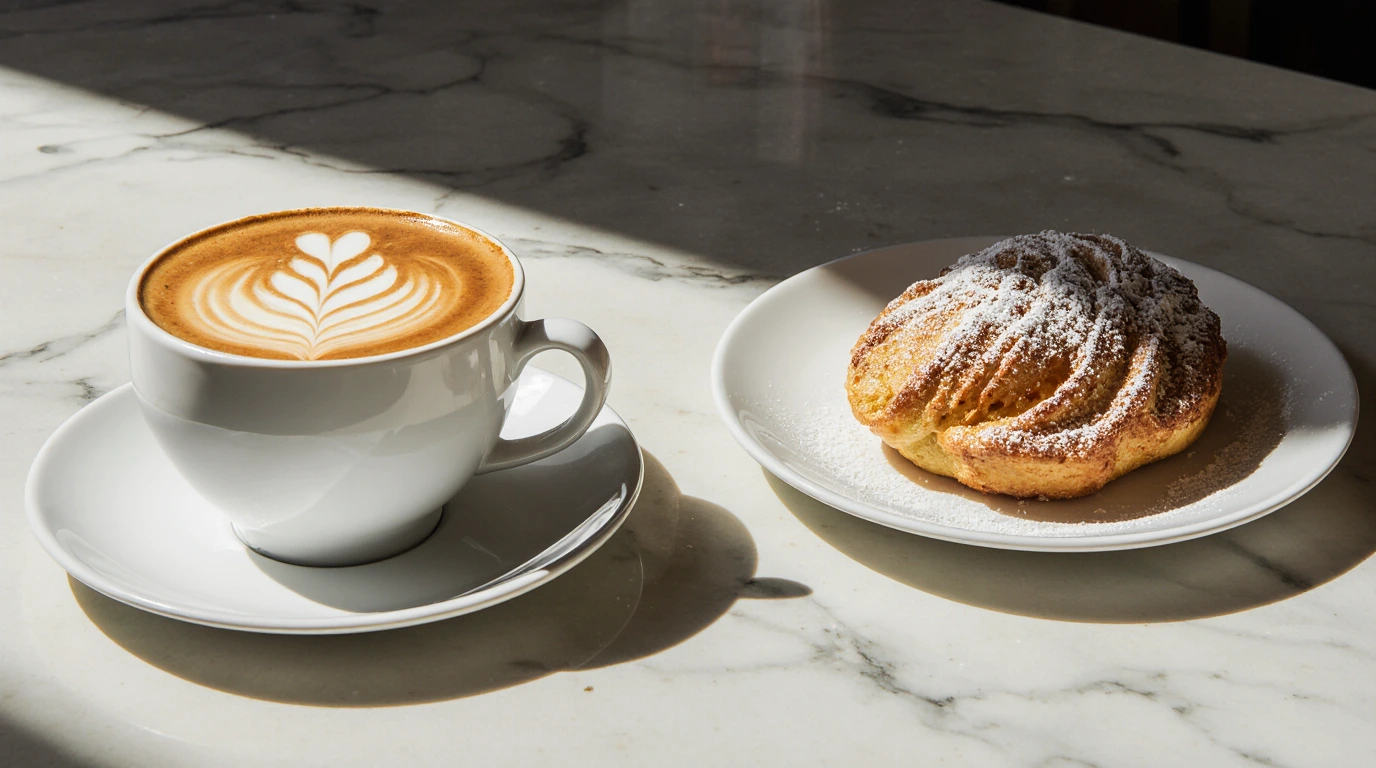
If you imagine an Italian breakfast loaded with eggs, bacon, and pancakes, you’re not alone and you’d be wrong. Italian breakfast foods follow a very different logic from what’s common in the U.S. or the U.K. The Italian morning meal is light, quick, and usually sweet, designed to wake up the appetite rather than satisfy it completely.
Breakfast in Italy isn’t about sitting down for a long meal. It’s about starting the day gently, often standing at a café counter with a hot drink and something small to eat.
Understanding Italian breakfast culture means letting go of the idea that breakfast must be heavy to be “real.”

What Is a Traditional Italian Breakfast?
A traditional Italian breakfast typically includes one sweet item and one hot drink. That’s it. No plates stacked with food, no long preparation, and no rush to eat large portions.
Most Italians eat breakfast between 7:00 and 9:00 a.m., either at home or at a nearby café, known as a bar in Italy.
The most classic combination is:
- A cornetto (similar to a croissant, but sweeter and softer)
- A cappuccino or espresso
This pairing is so common that it’s almost automatic. Order one without the other, and you’ll stand out.
Sweet vs Savory: The Italian Morning Preference
One of the most surprising aspects of Italian breakfast foods is the strong preference for sweet flavors in the morning.
Savory foods like eggs, cheese, or cold cuts are rare at breakfast. These are considered lunch or dinner items. For Italians, the morning is not the time for heavy or salty foods.
Instead, common sweet breakfast items include:
- Pastries
- Toast with jam
- Biscuits dipped in coffee or milk
- Simple cakes
The sweetness is usually mild, not overwhelming. Portions are small, which keeps the meal light and digestible.
Breakfast Culture in Italy vs Other Countries
Compared to other countries, Italian breakfasts are:
- Smaller in portion size
- Lower in protein and fat
- Focused on taste and ritual rather than nutrition goals
In places like the U.S. or U.K., breakfast is often expected to “fuel” the entire morning. In Italy, lunch is the main meal of the day, so breakfast doesn’t need to carry that responsibility.
This cultural difference explains why Italian breakfast foods may seem insufficient to outsiders but for Italians, they fit perfectly into the rhythm of the day.
Why Italian Breakfast Is Usually Light
The light nature of Italian breakfast is not accidental. It reflects lifestyle habits that include:
- A later, more substantial lunch
- Walking or commuting after breakfast
- A focus on digestion and comfort
Eating too much early in the day is often seen as unnecessary or uncomfortable.
Rather than eating a lot at once, Italians spread their food intake throughout the day. Breakfast simply opens the appetite.
Where Italians Eat Breakfast
Most Italians choose between two options:
- At home, quickly and simply
- At a bar, standing at the counter
Breakfast at a café is often faster than sitting down. Locals order, eat, drink, and leave within minutes. It’s social, efficient, and deeply ingrained in daily life.
Most Popular Italian Breakfast Foods
Italian breakfast foods may look simple, but they reflect decades of habit and cultural consistency. What Italians eat in the morning hasn’t changed much over time, and trends rarely disrupt these routines.
Let’s look at the foods you’re most likely to see on an Italian breakfast table or café counter.
Cornetto and Cappuccino
The cornetto is the undisputed star of Italian breakfast foods. Often compared to a croissant, it’s softer, slightly sweeter, and less buttery than its French cousin.
Cornetti come in several classic variations:
- Plain
- Filled with jam
- Filled with custard (crema)
- Filled with chocolate
Paired with a cappuccino, this combination defines breakfast for millions of Italians every day.
It’s important to note that cappuccino is considered a morning-only drink in Italy. Ordering one after late morning is culturally unusual, even though tourists often do.
Biscotti, Fette Biscottate, and Rusks
At home, many Italians opt for dry, crunchy breakfast foods that pair well with hot drinks.
Common options include:
- Biscotti or simple cookies
- Fette biscottate, which are thin toasted bread slices
- Rusks served with jam, honey, or hazelnut spread
These foods are practical. They last a long time, require no preparation, and fit easily into a busy morning routine.
They’re often eaten dipped into coffee, milk, or tea, which softens their texture and enhances flavor.
Italian Breakfast Cakes and Pastries
Another staple of Italian breakfast foods is cake but not the heavily frosted kind.
Italian breakfast cakes are typically:
- Light
- Homemade or bakery-style
- Flavored with lemon, yogurt, or almonds
Popular examples include:
- Simple sponge cakes
- Yogurt cakes
- Apple cakes
These cakes are cut into small slices and eaten with coffee or milk. Again, portion size remains modest.
Italian Breakfast Drinks
Breakfast drinks in Italy are just as important as food and often more so.
Cappuccino, Espresso, and Caffè Latte
Coffee dominates the Italian breakfast table.
The most common choices are:
- Cappuccino: espresso with steamed milk and foam
- Espresso (caffè): strong and quick
- Caffè latte: espresso with hot milk, more common at home
Milk-based coffee drinks are associated with breakfast only. As the day progresses, Italians switch to espresso.
Coffee is usually consumed quickly, often standing, and rarely taken to go.
Juice and Other Morning Beverages
Fruit juice is less common but still present, especially orange juice. Tea is less traditional but growing in popularity, particularly among younger generations.
Water is rarely part of breakfast itself, as hydration typically comes later in the morning.
Do Italians Eat Eggs or Bacon for Breakfast?
This is one of the most frequently asked questions about Italian breakfast foods.
The answer is simple: almost never.
Eggs, bacon, cheese, and cold cuts are considered savory and heavy. Italians associate them with lunch or dinner, not breakfast.
Eating savory foods early in the day is often seen as excessive or uncomfortable.
Are Italian Breakfast Foods Healthy?
At first glance, Italian breakfast foods often raise questions about health. Pastries, biscuits, cakes, and sweetened coffee don’t immediately sound like the ideal way to start the day especially from a modern, protein-focused perspective.
However, health is not just about individual foods. It’s about context, portion size, and overall lifestyle.
Italian breakfasts are generally:
- Small in quantity
- Low in calories compared to heavy savory breakfasts
- Consumed as part of a day with structured meals
This changes how they affect the body.
Sugar Content and Portion Sizes
Yes, Italian breakfast foods contain sugar. Cornetti, biscuits, and cakes are sweet by design. The key difference lies in portion control.
A typical Italian breakfast includes:
- One pastry or a small slice of cake
- One coffee-based drink
There’s no second helping, no large plates, and rarely any snacking immediately afterward. This keeps overall sugar intake moderate.
In contrast, many “healthy” breakfasts elsewhere include large portions of granola, sweetened yogurt, fruit juice, and spreads often with more total sugar than a single cornetto.
Italian breakfast culture emphasizes restraint, not restriction.
How Italian Breakfast Fits into a Balanced Diet
Italian breakfasts are light because lunch is the main meal of the day. Protein, vegetables, and savory foods appear later, which balances overall nutrition.
This pattern works because:
- Breakfast stimulates appetite rather than suppressing it
- Meals are spaced naturally
- Overeating early in the day is avoided
The Italian approach focuses less on macronutrient optimization and more on comfort, digestion, and rhythm.
It’s not a strategy designed around fitness goals but it aligns surprisingly well with long-term moderation.
Regional Variations in Italian Breakfast
While breakfast habits are consistent across Italy, small regional differences exist.
Northern vs Southern Italy
In Northern Italy, breakfast foods may include:
- Butter-based pastries
- Richer bakery items
- More frequent café breakfasts
In Southern Italy, breakfasts often lean toward:
- Simpler pastries
- Homemade cakes
- Stronger espresso
Despite these differences, the core structure remains the same: sweet, light, and quick.
How to Make an Italian-Style Breakfast at Home
Recreating Italian breakfast foods at home is easier than most people expect.
Simple Italian Breakfast Ideas
To build an Italian-style breakfast:
- Choose one sweet item (pastry, toast with jam, or cake)
- Pair it with coffee or milk
- Keep portions small
- Avoid heavy savory foods
The goal is enjoyment, not fullness.
Common Mistakes to Avoid
The most common mistakes include:
- Making portions too large
- Adding too many items at once
- Turning breakfast into a full meal
Italian breakfast works because it stays simple.
How Italian Breakfast Fits into a Broader Daily Eating Pattern
Not all chicken choices have the same nutritional profile, which is why questions around foods like chicken wings often come up:
https://tastymealrecipes.com/are-chicken-wings-healthy/.
For those focusing on protein intake, lean cuts such as chicken breast are generally more efficient, especially in structured meals later in the day, as explained here:
https://tastymealrecipes.com/chicken-breast-high-protein/.
Other cuts, like chicken drumsticks, offer a different balance of protein and fat, which can also play a role in meal planning:
https://tastymealrecipes.com/chicken-drumstick-protein-amount-guide/.
Check medium here
Seen this way, the light Italian breakfast makes sense as part of a daily rhythm where heavier, protein-focused foods are saved for later meals.
What Time Do Italians Eat Breakfast?
Most Italians eat breakfast between 7:00 and 9:00 a.m., often just before work or school.
Do Italians Eat Croissants Every Day?
Many do but in moderation. A daily cornetto is common, especially when balanced with lighter meals later in the day.
Final Thoughts: Understanding Italian Breakfast Culture
Italian breakfast foods reflect a broader philosophy of eating: simple, habitual, and restrained.
They aren’t designed to maximize protein or fuel intense workouts. They’re designed to start the day comfortably and pleasantly.
For those used to heavy breakfasts, the Italian approach may feel minimal. But within the context of Italian eating habits, it works remarkably well.